Learn · Separation
Untangling the mix.
Learn · Separation
One mixed signal.
Three parts inside.
A finished song is one mixed signal. Stem separation estimates which part of that wave belongs to the voice, the drums and the rest. Today it is done by neural networks trained for exactly that.
Download on theApp StoreLearned from examples.
The model
Mixes and their parts,
side by side.
A separation model learns from songs whose parts exist on their own. It hears the mix, guesses each part, compares its guess with the real one and adjusts. After enough examples, it hears the voice in a mix it has never met.
It does not look the song up anywhere. Everything it knows is inside the model.
Time and frequency.
How it listens
Sound as a picture
of time and pitch.
Many models turn the audio into a spectrogram, a picture of which frequencies sound at each moment, and decide how much of each point belongs to each part. Others work on the raw wave, and some combine both.
Where parts overlap in time and pitch, the model has to share the sound between them. That is why no separation is perfect: a little of one part can stay in another.
On your chip.
In Norah Studio
No server.
No upload.
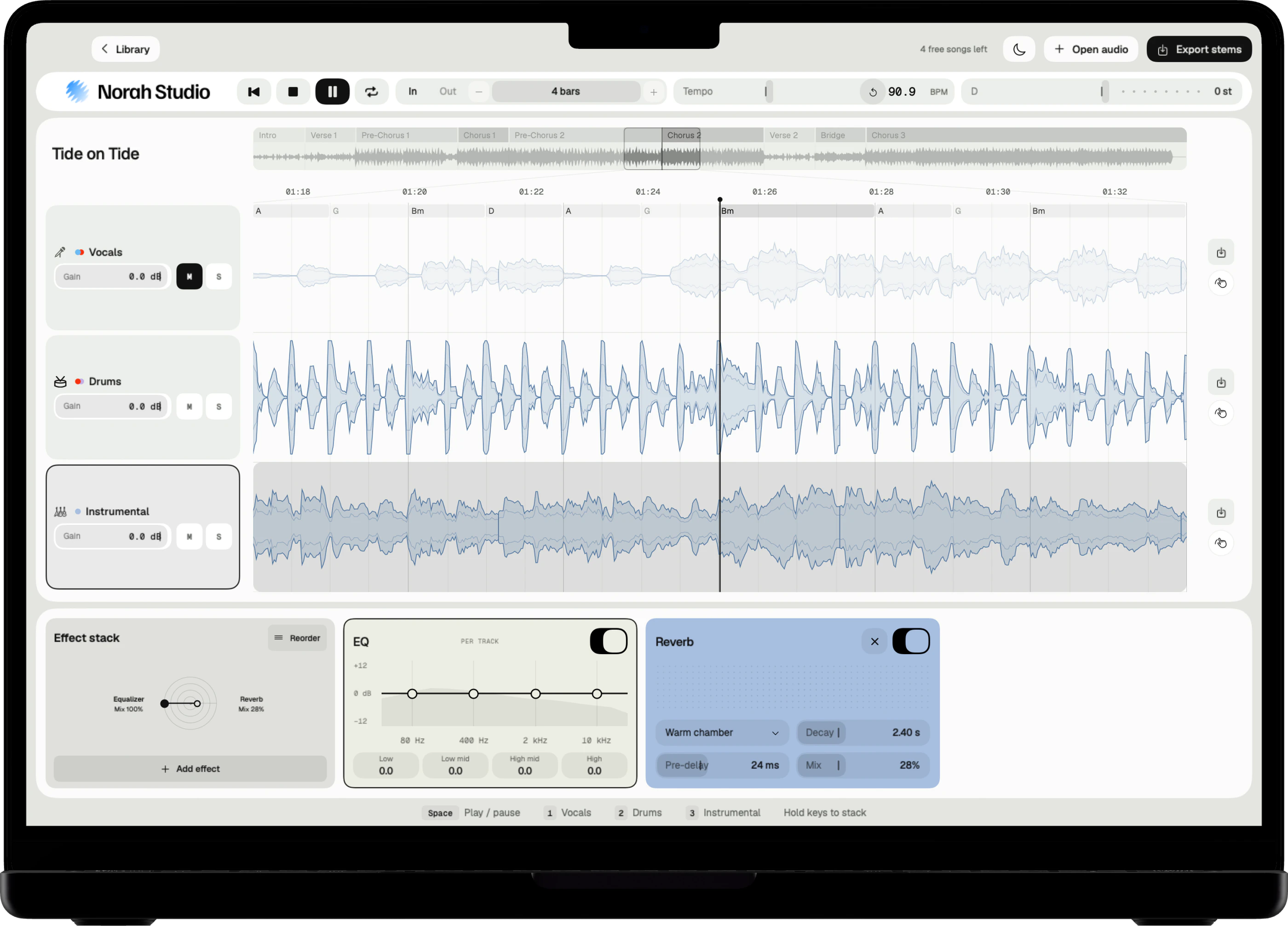
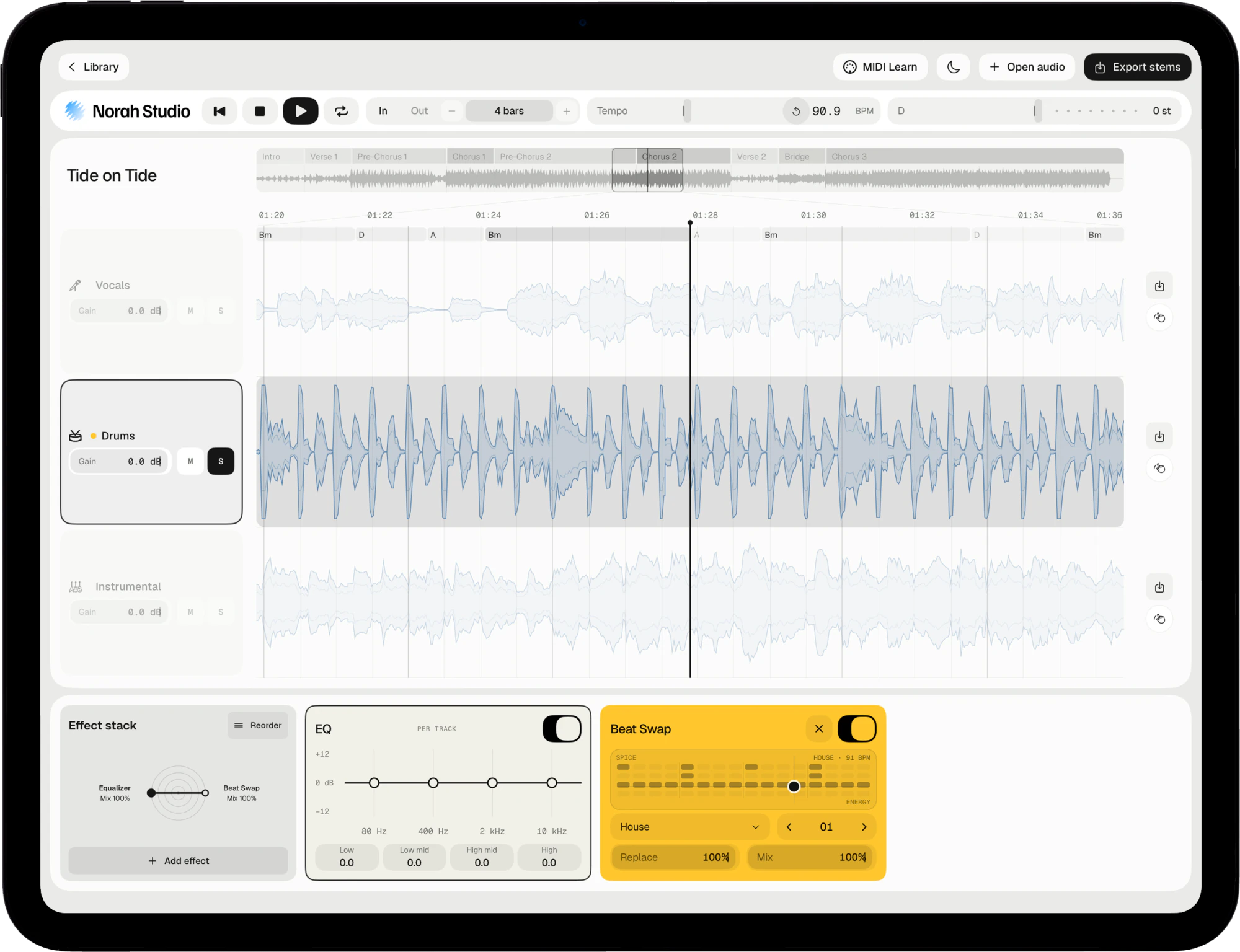
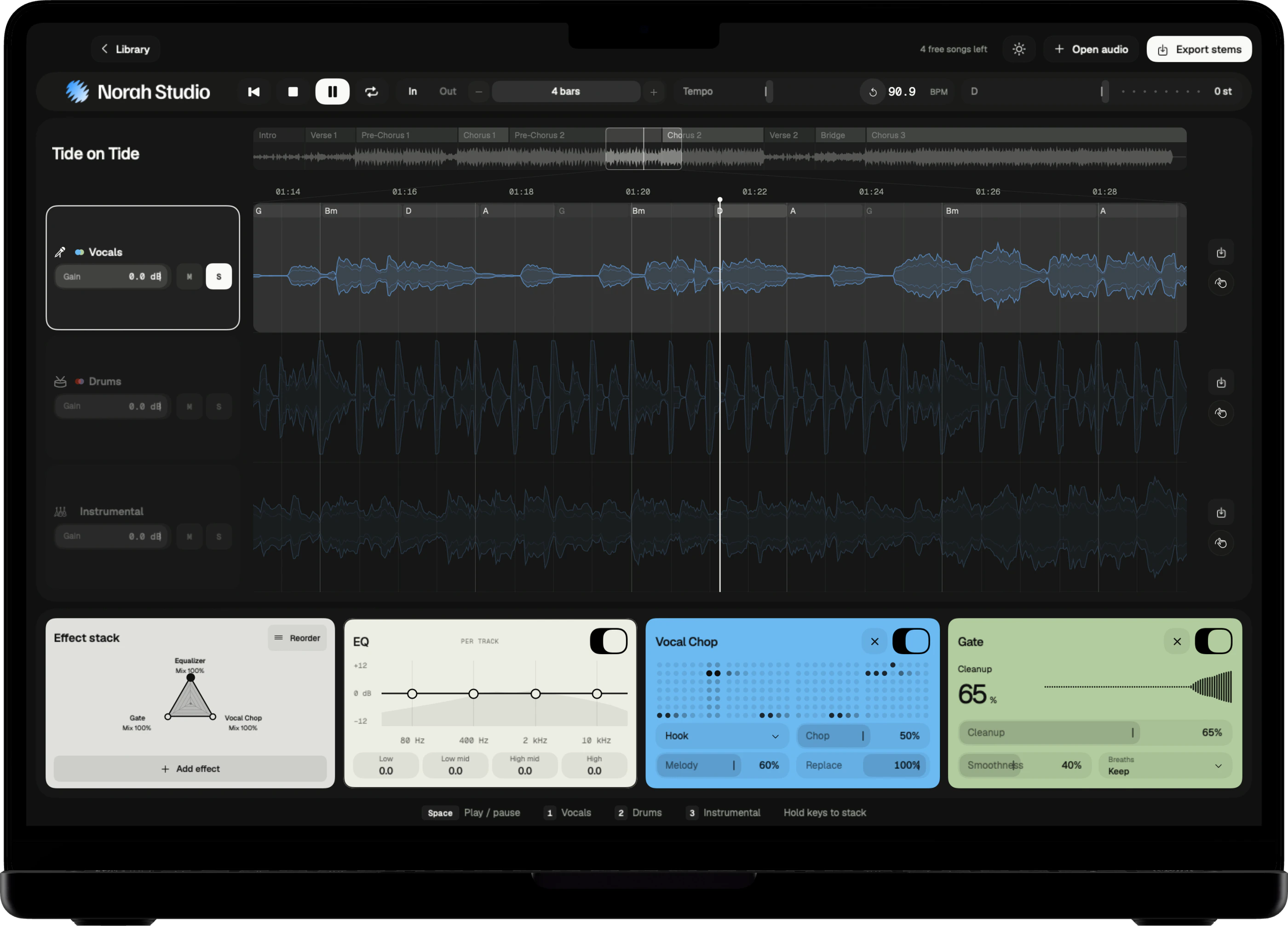
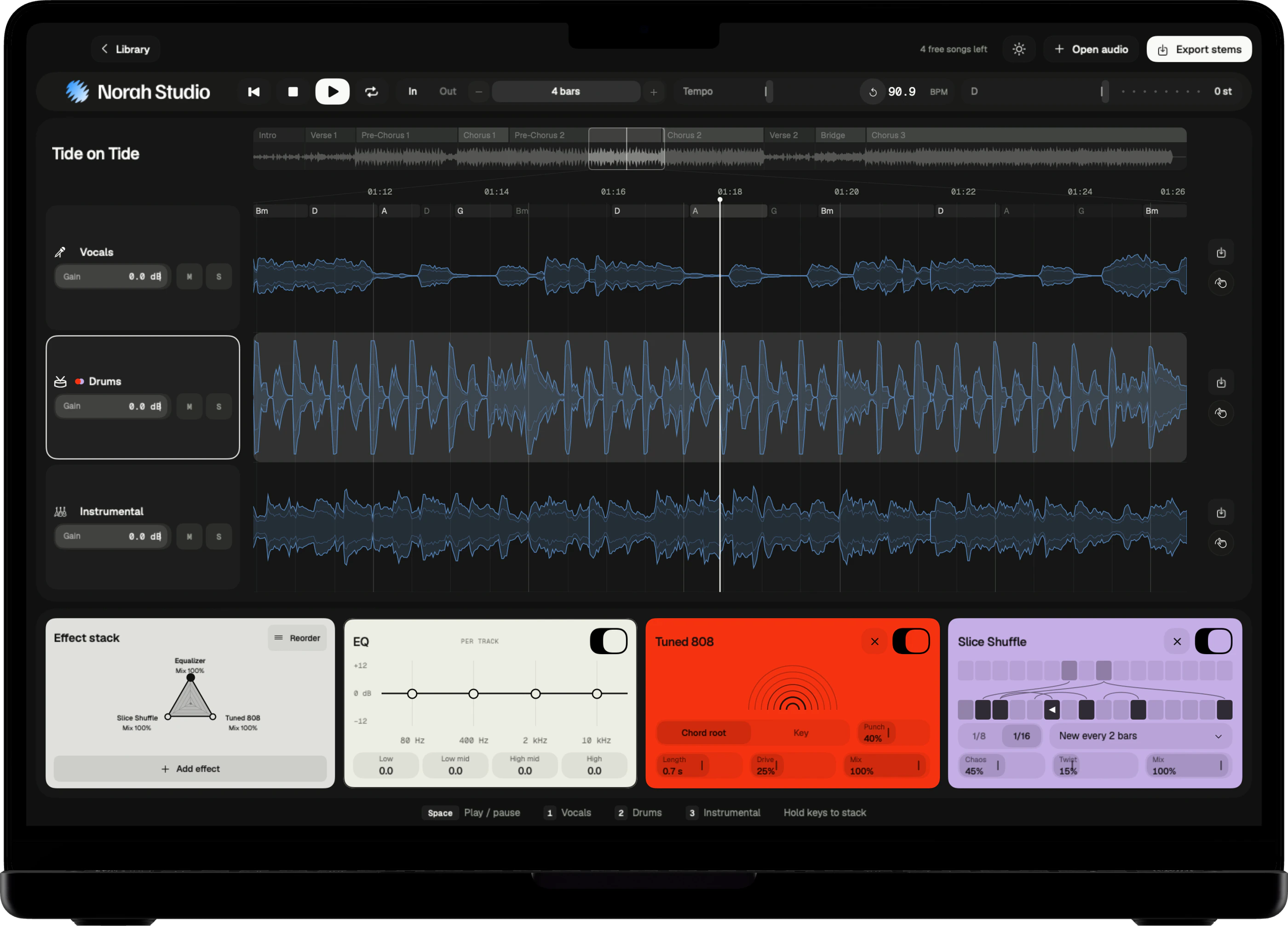
Norah Studio carries its models inside the app and runs them on the chip in your Mac, iPad or iPhone. The song never leaves the device, and it works in airplane mode.
It separates the beginning first and plays it while the rest is still being separated. On a Mac, the first sound arrives in 1.1 seconds; on an iPhone 16, in 1.5 seconds, measured on a song of 2 min 18 s.
Try it yourself.
In Norah Studio