Learn · Key
Moving the key.
Learn · Key
Every song has a home.
You can move it.
The key of a song is the note it feels at home on, and the scale built from there. Transposing moves the whole song up or down, so every note keeps its place against the others.
Download on theApp StoreA home note.
The key
A note to rest on.
A scale around it.
Hum the last note of a song and you will often land on its home note, the tonic. The key names that note and whether the song is major or minor: C major, A minor.
Western music divides the octave into twelve steps called semitones. Move a song twelve semitones and it lands in the same key, an octave higher or lower.
Why move it.
Transposing
For a voice,
for a pair of hands.
Singers transpose to bring a melody into their range. Guitarists and pianists move songs into keys whose shapes they know.
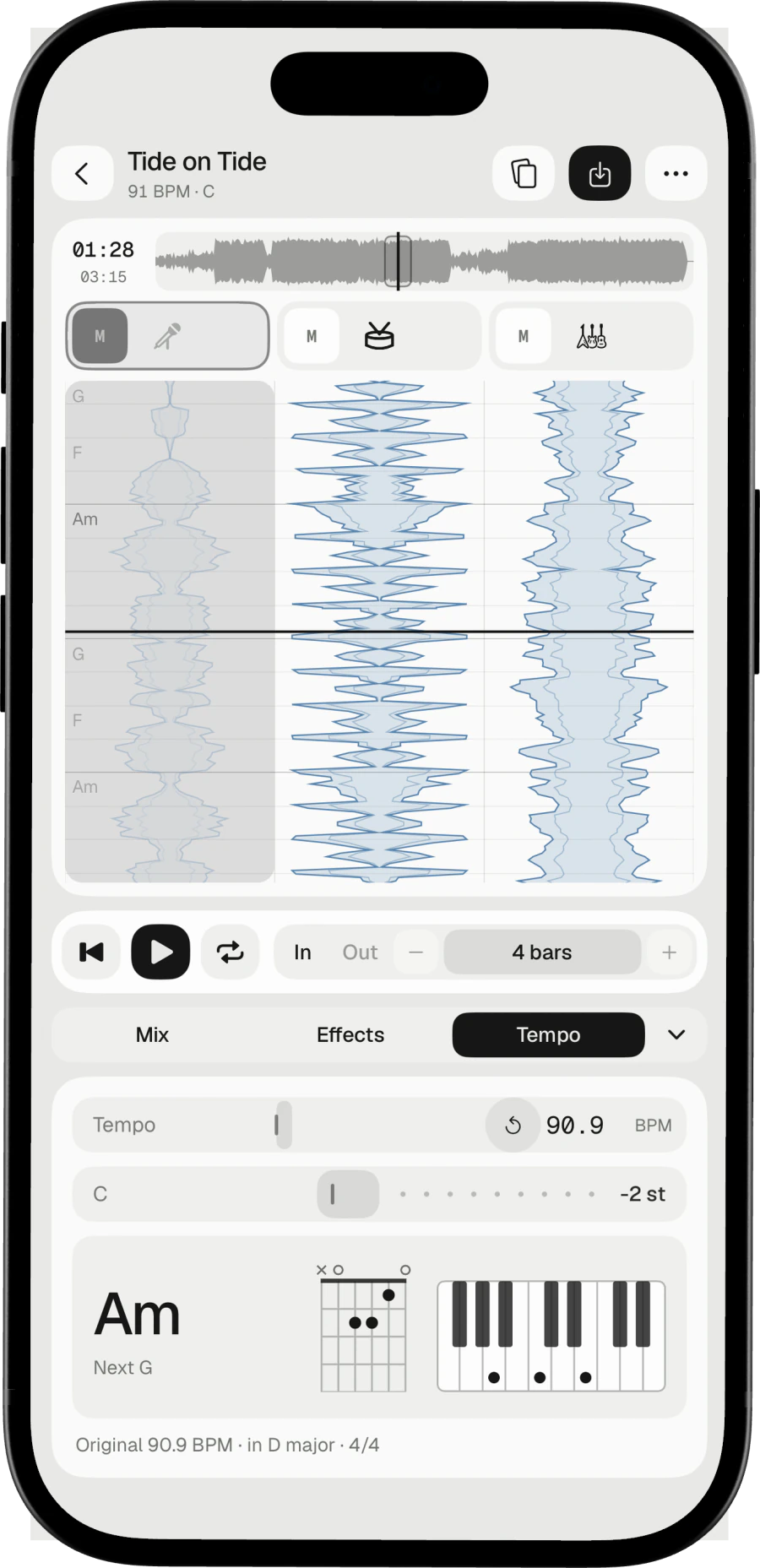
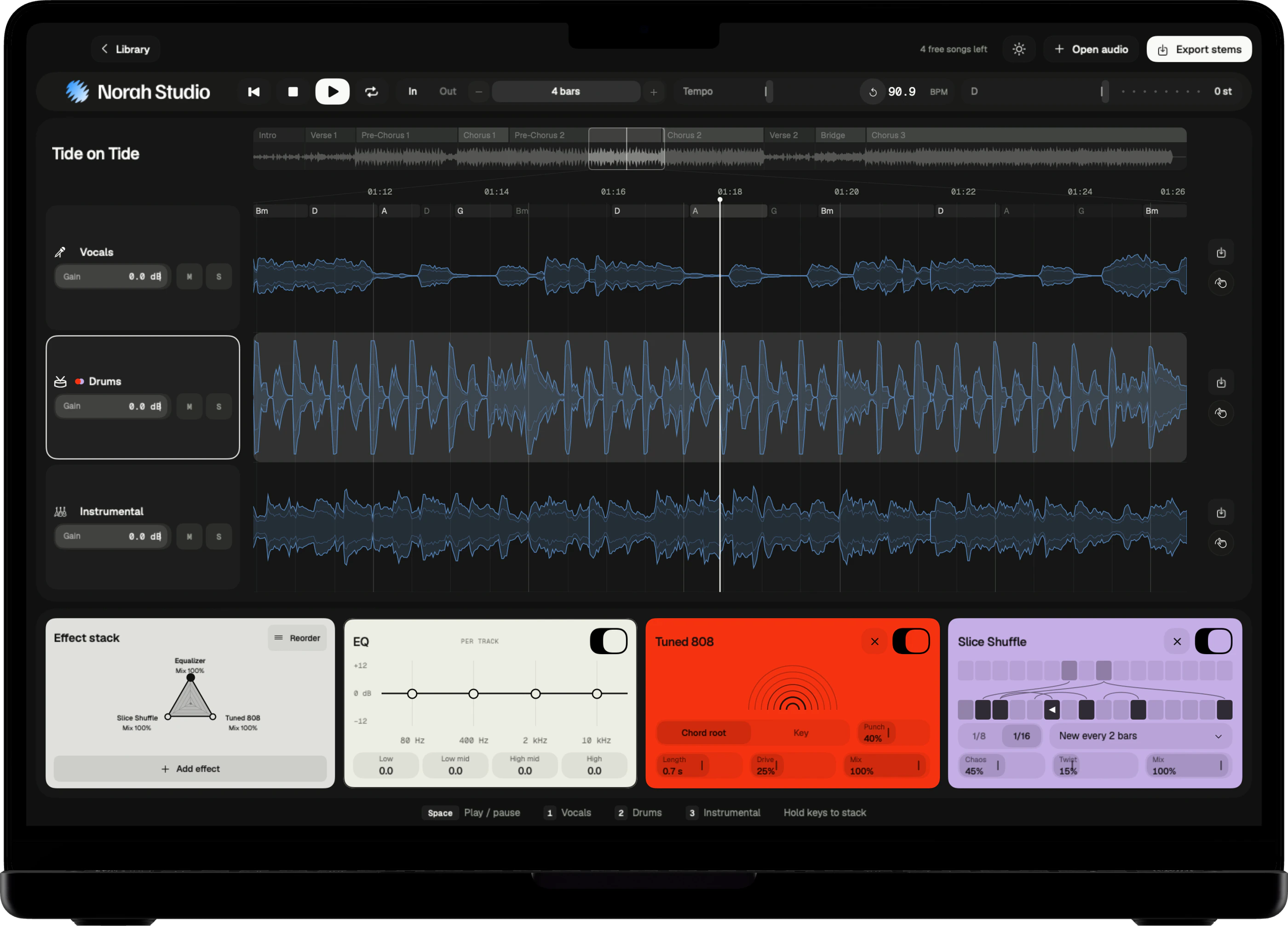
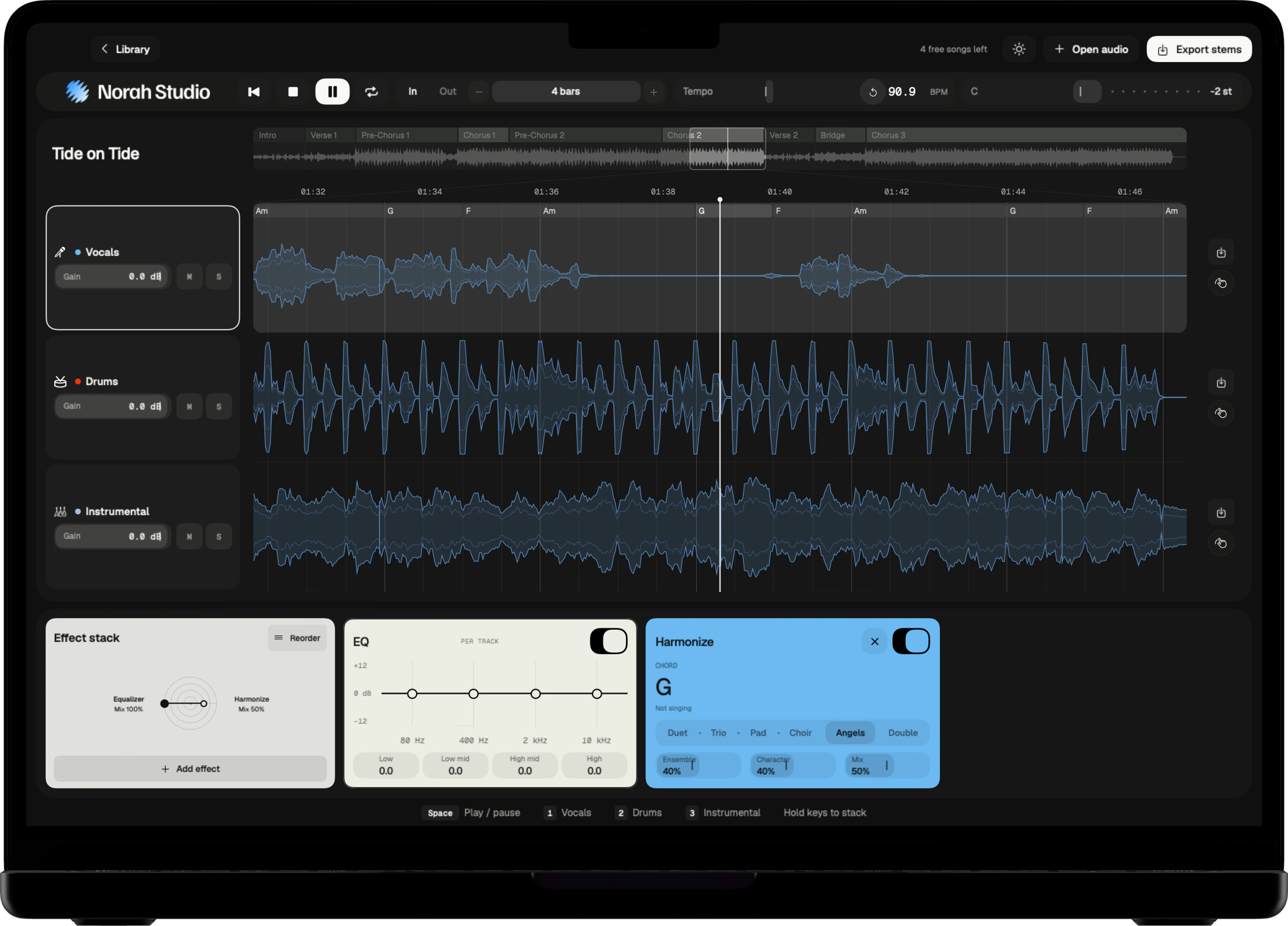
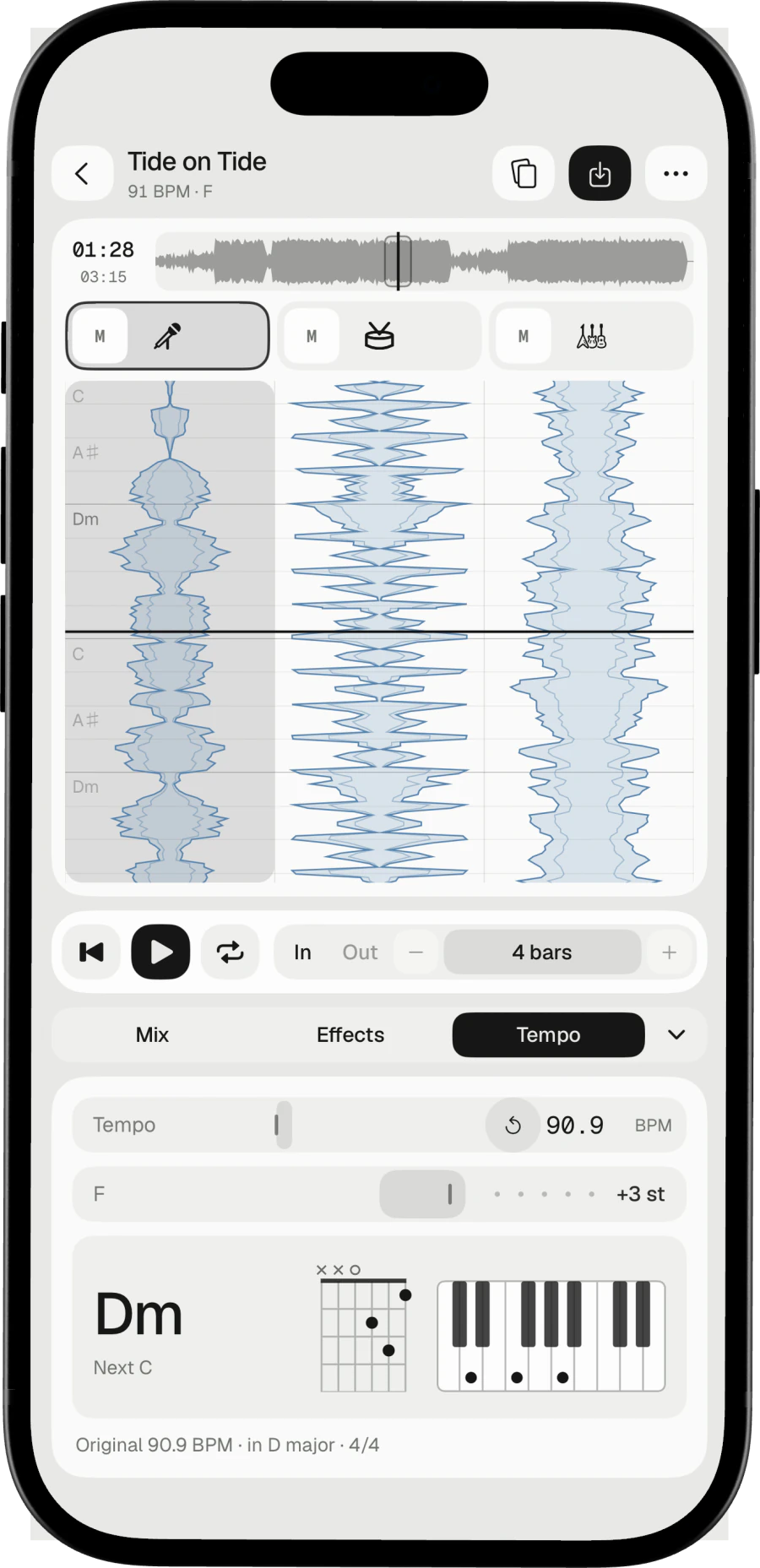
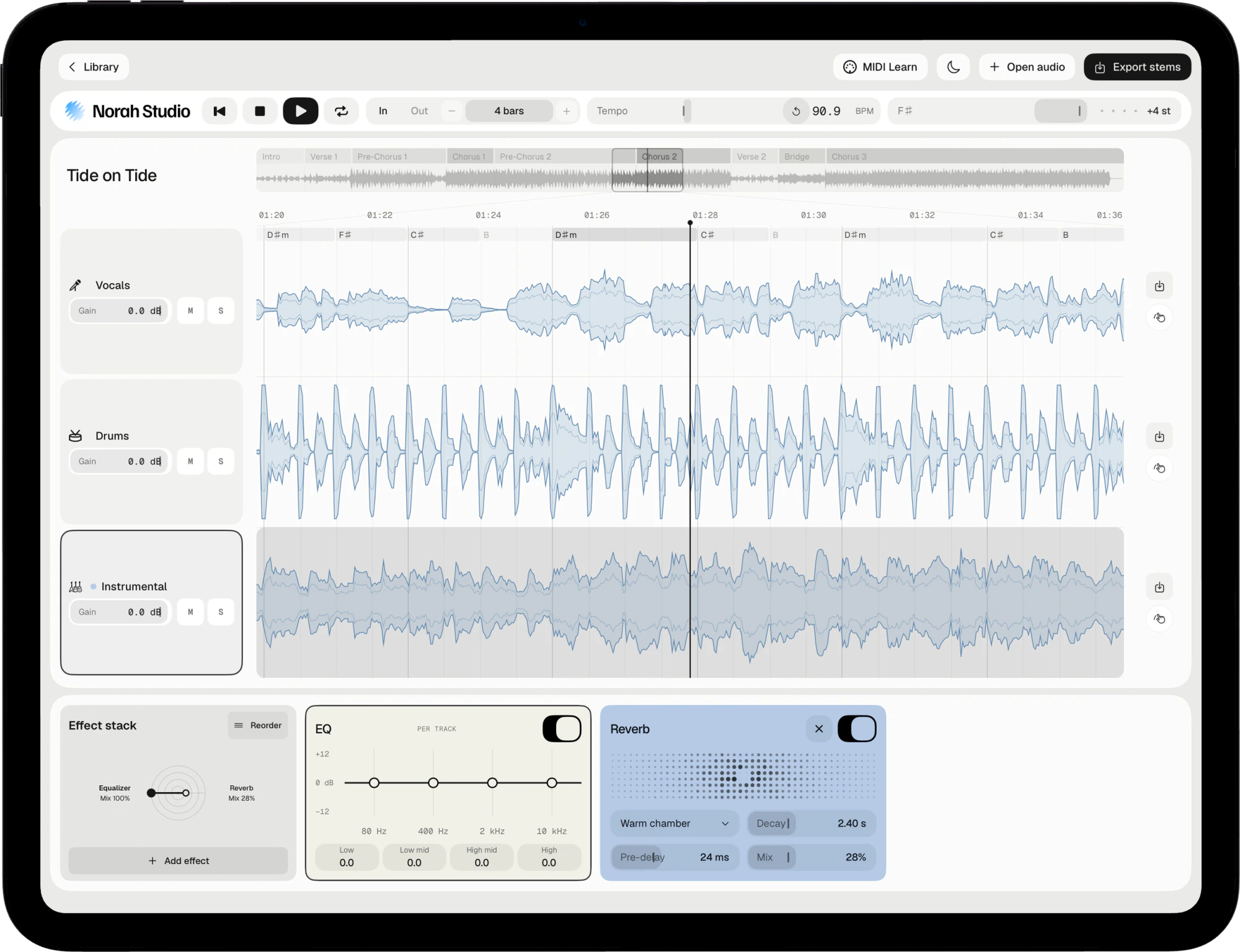
Good transposition changes the pitch without changing the tempo. Norah Studio moves the three stems together, up to twelve semitones either way, while the song plays.
An estimated key.
In Norah Studio
The key, found.
Then labelled.
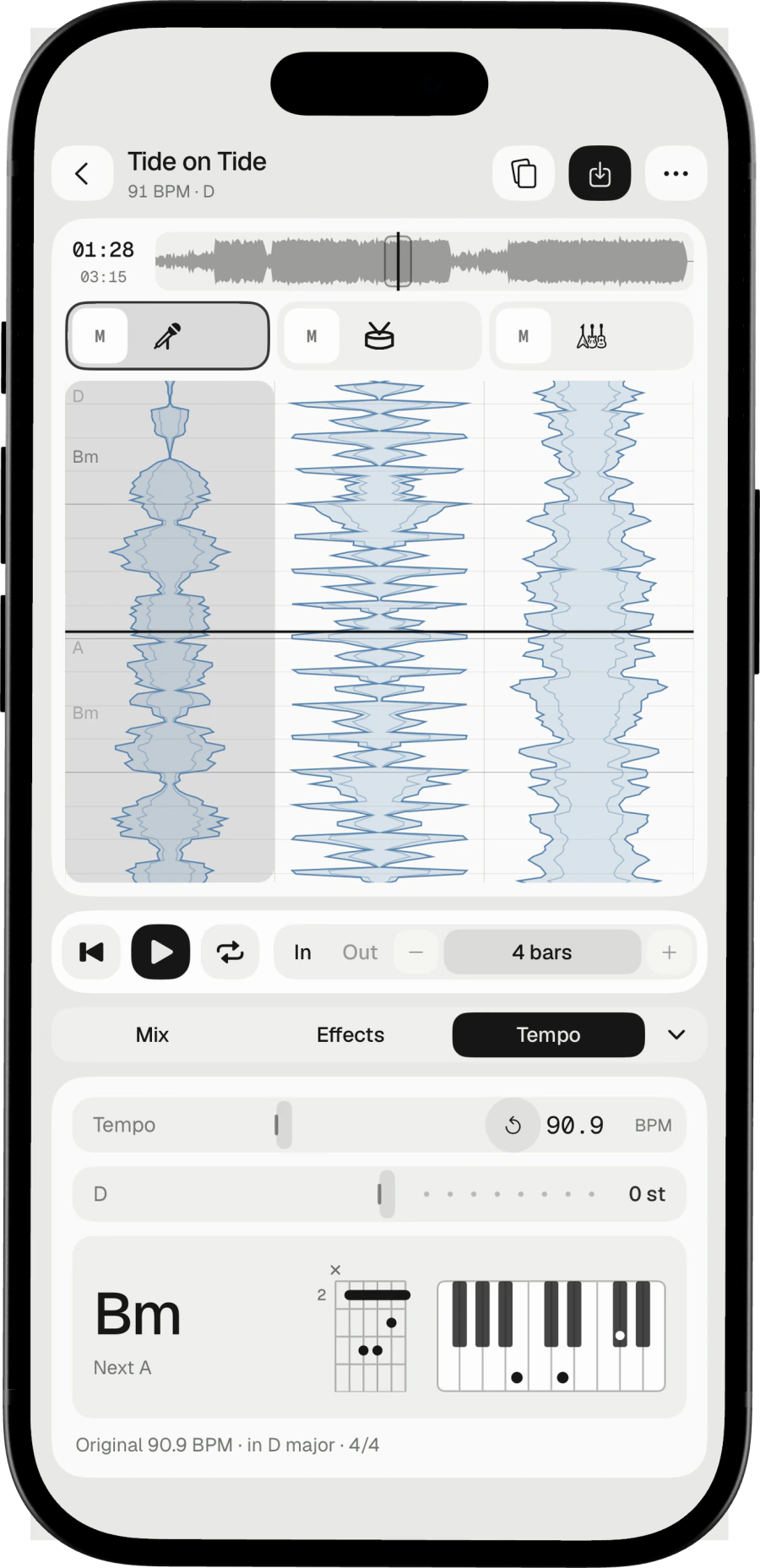
Norah Studio estimates the key of each song and shows it with the tempo. It is an estimate, and the app labels it so: check it by ear against your instrument.
When you move the key, the exported stems and the MIDI chords leave in the new key.
Try it yourself.
In Norah Studio